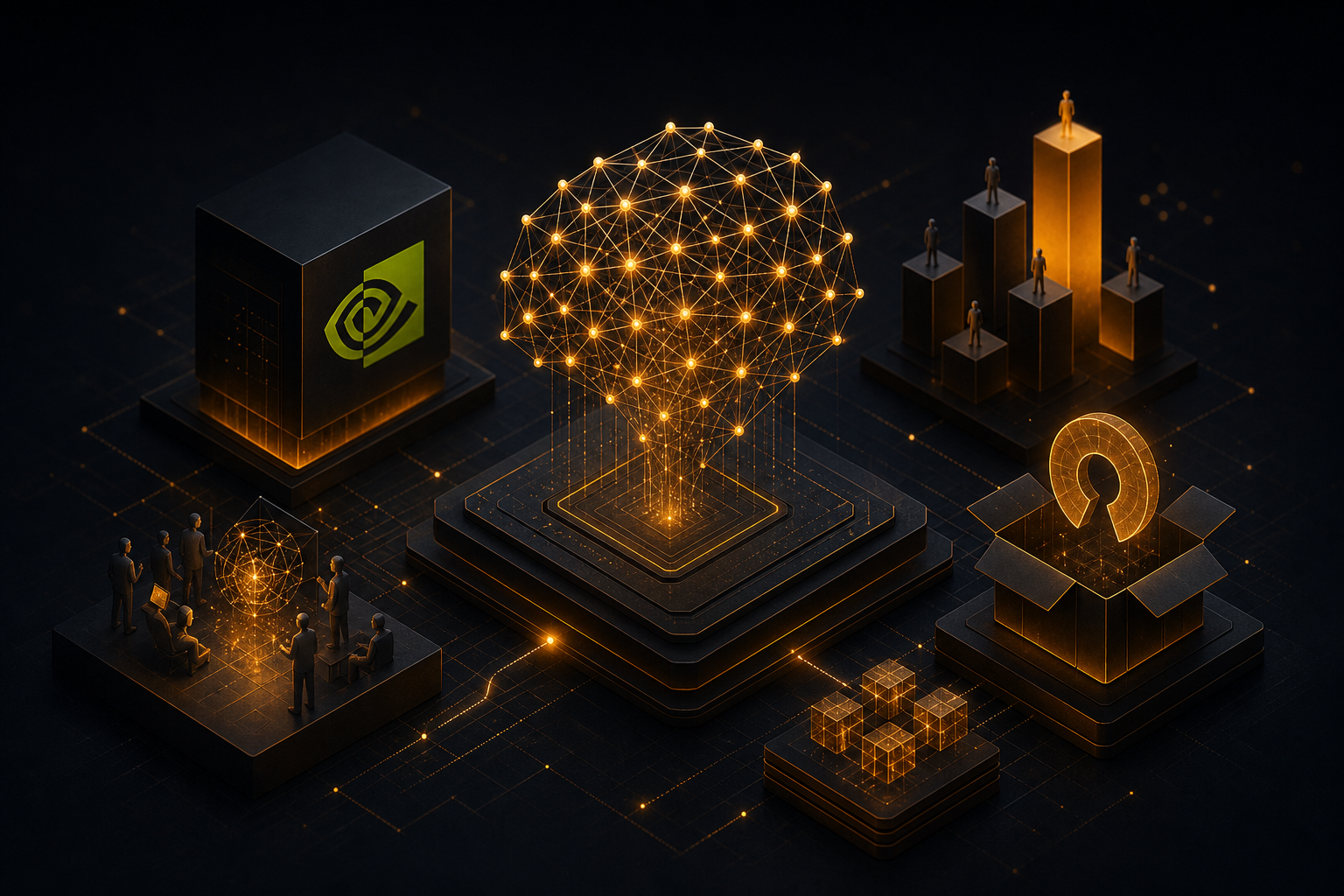
Nvidia is developing its own large language model called Nemotron 4 with 1 trillion parameters, according to reporting by The Information and Reuters. The project demonstrates that Nvidia wants to move beyond being merely a hardware supplier for AI developers—it now aims to compete directly in the market for large language models, rivaling OpenAI and Anthropic.
Key Facts
- Nvidia is building Nemotron 4 with 1 trillion parameters
- The model is designed to rival open-source models like Llama
- Source: The Information, reported by Reuters
- Signals Nvidia's pivot from hardware to AI products
Value Creation Shifts
Historically, Nvidia's profits came primarily from GPUs and accelerators—the chips used to train models like ChatGPT. With Nemotron 4, the company enters new territory: it becomes a model developer itself. This is strategically significant because margins in the model business differ from pure hardware sales. Whoever controls the model controls how users interact with AI.
Focus on Open-Source Competition
According to The Information, Nemotron 4 is designed to compete with open-source language models—not with proprietary systems from OpenAI (GPT-4) or Anthropic (Claude). This makes sense: the open-source market is growing rapidly, and models like Llama from Meta are gaining traction. Nvidia could establish a foothold here with its own well-optimized model while simultaneously boosting hardware sales—anyone training or deploying Nemotron 4 will need Nvidia's chips.
Implications for the Industry
This announcement underscores a broader trend: AI value creation is no longer confined to individual layers (hardware, models, applications) but is being vertically integrated by major players. Nvidia, as a chip giant now building models, intensifies pressure on specialized providers. At the same time, a strong open-source model from Nvidia could benefit the community—if it truly remains open.
For German enterprises and research institutions, this means dependency on US-based AI providers will not diminish. A Nvidia model like Nemotron 4 may offer an alternative to proprietary systems, but it keeps users tied to Nvidia's ecosystem. Those seeking independence should invest in parallel European model development—or rely on genuinely open-source alternatives not controlled by a hardware monopolist.
Sources
Editorially owned by Ideal Syka. Sources and method: Newsroom & method. Tips and corrections: ai@i6eal.de.