
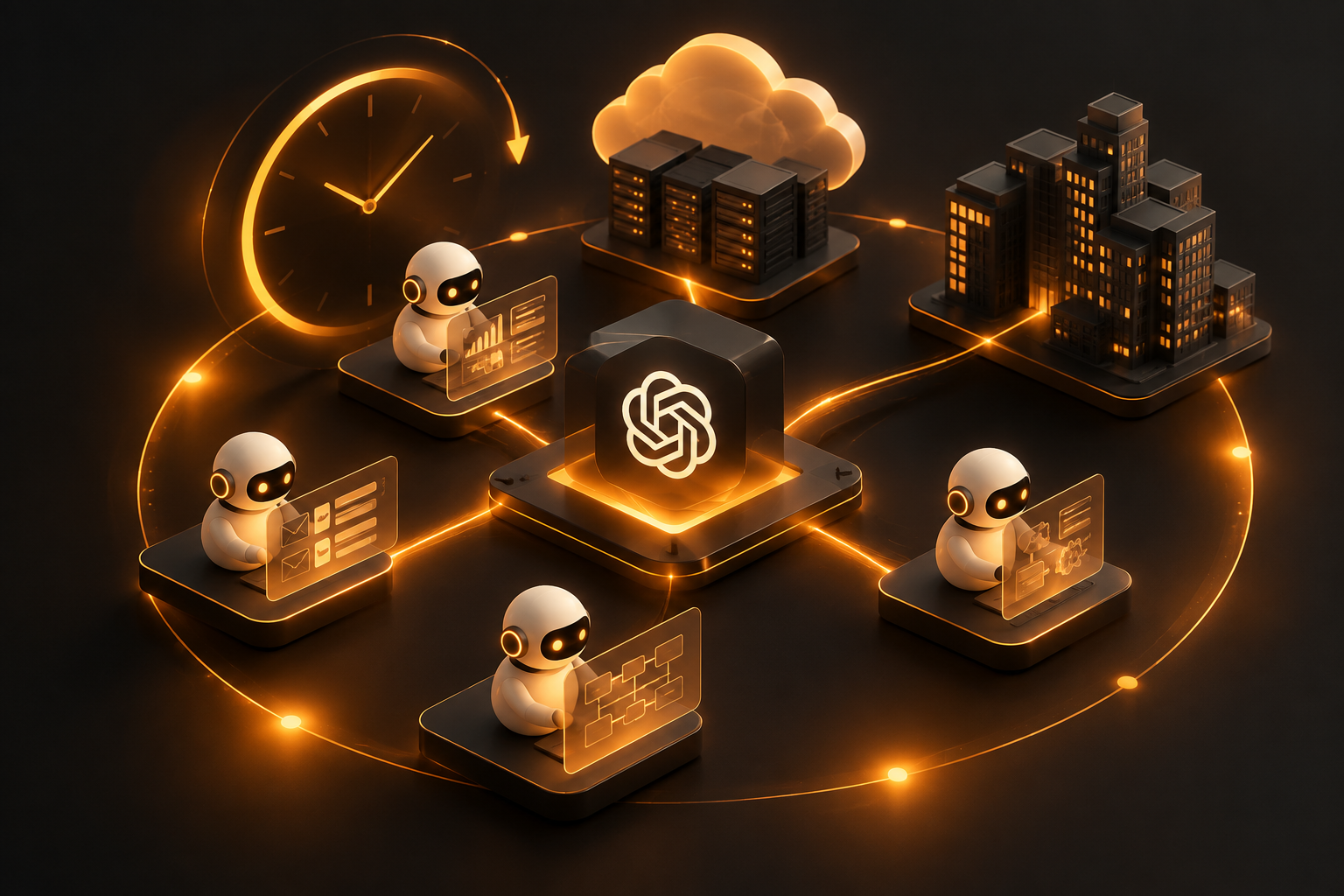
OpenAI has launched a new product: Dots are AI agents that remain permanently active and operate within their own cloud computer. Unlike traditional chatbots that only respond when prompted, Dots work independently in the background – 24/7.
The essentials
- Dots are permanently active AI agents from OpenAI with dedicated cloud access
- They execute tasks autonomously and continuously without constant user intervention
- The product targets enterprises requiring large-scale automation
- OpenAI is positioning itself as a provider of autonomous work systems, not just chatbots
How Dots work
Dots differ fundamentally from conventional AI assistants. They don't rely on question-and-answer cycles; instead, they receive a task and work through it independently – even when the user is offline. The cloud computer provides them with a stable environment to process data, call external APIs, and make decisions.
This model resembles agent architectures that have been discussed in AI research for years: a system that pursues goals, plans intermediate steps, and corrects errors autonomously. OpenAI is now making this commercially available.
What this means for enterprises
For mid-market and larger companies, Dots could become valuable for automating repetitive, time-intensive processes – such as data processing, monitoring, or customer service workflows. The advantage: the AI runs in the background without constant employee oversight.
However, questions about costs and control remain. How expensive is it to run an agent continuously? How can companies ensure the AI stays on track? OpenAI will need to clarify pricing models and governance tools.
Outlook: Autonomy as the next frontier
Dots represent a significant milestone in AI commercialization: a shift from reactive assistants to proactive agents. This isn't new in theory, but it is new as a mainstream product from a major provider. For German enterprises, this means autonomous AI systems are no longer science fiction – they're a real investment option, with all the opportunities and risks that autonomous systems entail.
Sources
Editorially owned by Ideal Syka. Sources and method: Newsroom & method. Tips and corrections: ai@i6eal.de.