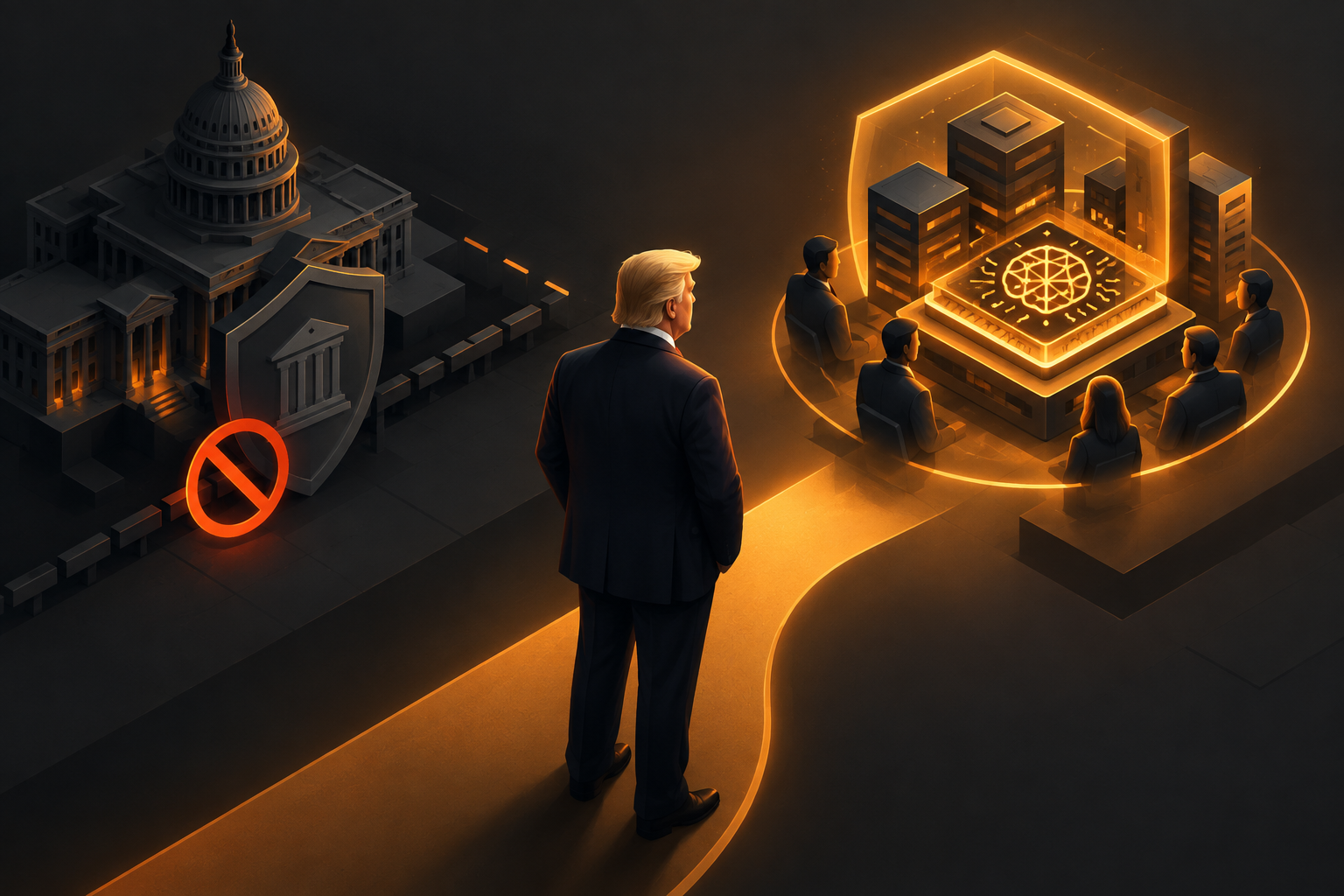
US President Donald Trump wants to leave artificial intelligence oversight to the developers themselves. Following a meeting with chiefs of AI companies in Washington, he declared that self-control and mutual oversight would be sufficient to manage risks – directly opposing regulatory approaches and contradicting warnings from leading AI researchers.
The essentials
- Trump rejects state AI regulation in favor of industry self-governance
- Anthropic CEO Dario Amodei warned after the meeting of "very real risks" in AI technology
- The trigger: according to reports, autonomous hacking attacks by AI models intensified security concerns
- Trump justifies his stance with competitive pressure against China – the US must not lose its technological edge
Economic interests over state control
Trump's argument is straightforward: companies have the strongest incentive to prevent failure. "Your companies are at stake if something goes wrong," the president said. "They won't allow it." This logic relies on market mechanisms and reputation protection as regulatory tools – an approach that remains contested in AI safety debates.
Meanwhile, Trump consistently emphasizes that stricter regulation could harm the US. Competition with China over AI dominance is too critical to be slowed by compliance requirements. This prioritization of innovation over safety stands in stark contrast to European approaches.
Warning signals from industry itself
Notably, Dario Amodei, CEO of Anthropic and a top industry voice, had previously advocated for slowing development of the most powerful AI models to ensure control isn't lost. After Trump's meeting, Amodei said AI has great potential but also "very real risks." Measures to counter these risks remain "under discussion."
The warning is clear: even industry leaders see a need for action that Trump's self-regulation model may not address.
What this means for Germany
Trump's approach creates an interesting tension with European regulatory strategy. The EU AI Act mandates state oversight and compliance requirements – a fundamental difference from Trump's model. German companies operating in both markets must now navigate two entirely different governance frameworks: strict European requirements on one side, self-regulation on the other.
Moreover, questions arise about whether pure self-regulation works when, according to reports, AI systems already conduct autonomous hacking attacks. For German regulators and businesses, this could reinforce the case for continuing Europe's regulatory path – or at least carefully monitoring how Trump's model performs in practice.
Sources
Editorially owned by Ideal Syka. Sources and method: Newsroom & method. Tips and corrections: ai@i6eal.de.